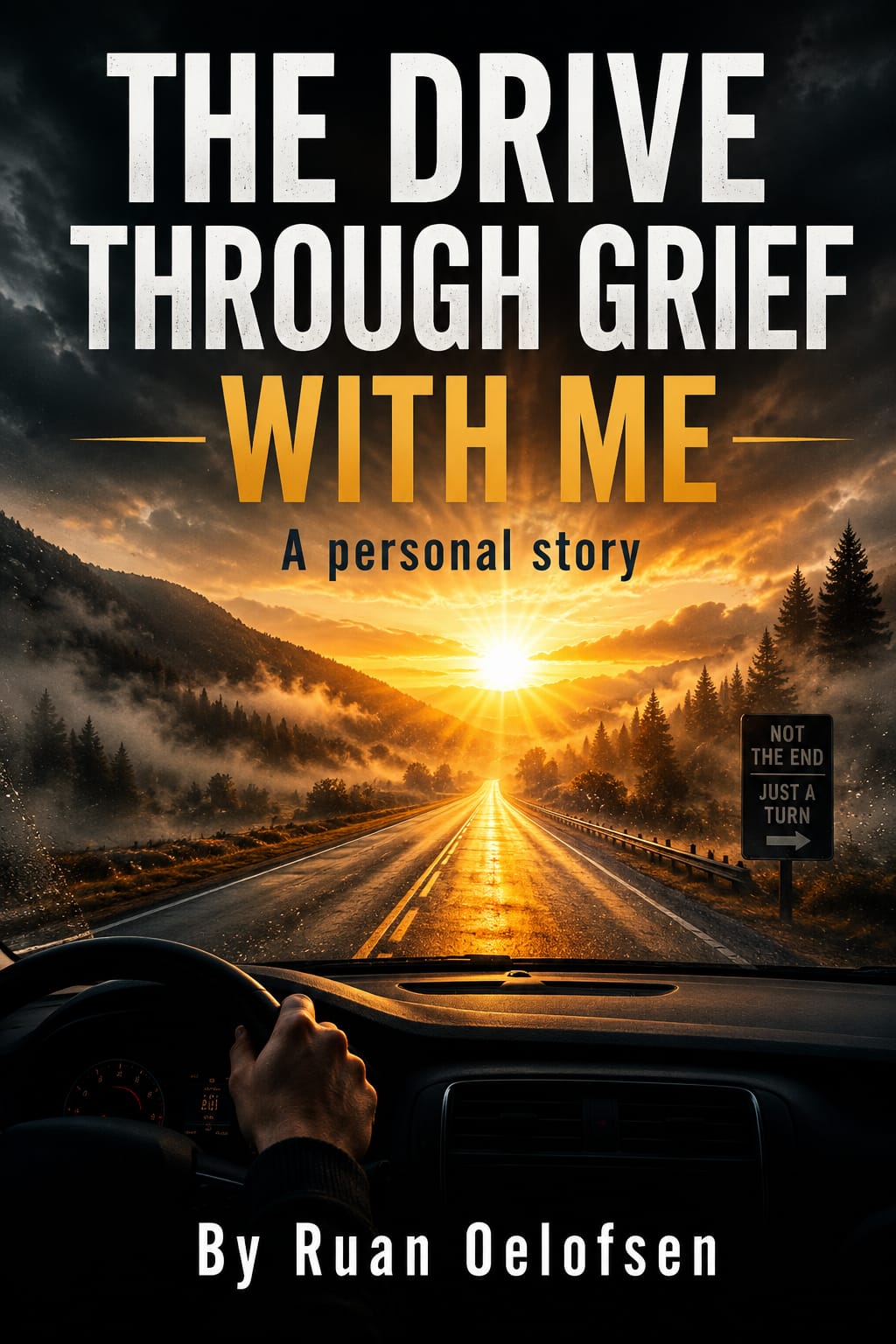
Most people do not struggle to write a memoir because they lack a story. They struggle because their whole life keeps showing up at once, and a book cannot hold a whole life — it can only hold the chapters that matter. How you choose those chapters is the difference between a memoir that reads like a diary and one that reads like a book.
Start with scenes, not a timeline
The fastest way to kill a memoir is to begin with "then this happened, then that happened." Chronology is not structure. Structure is selection.
Instead of opening your calendar, open your memory and make a scene list. Write down every moment you can still see in detail: the kitchen table where the news arrived, the hospital corridor, the car on the long straight road, the church pew. Do not judge them yet. Fifty to eighty scenes is a healthy harvest. Almost every one of them will be discarded — but the keeping happens later, in the shaping.
Find the question your memoir is answering
A memoir is not "interesting things that happened to me." It is a question you lived through, answered honestly in public. It might be: How do you hold onto hope when you cannot control your own body? Or: What does forgiveness cost and where does it come from?
Write that question down and pin it where you can see it. Every chapter must earn its place by answering part of it. Scenes that are vivid but steer away from the question get cut — no matter how much they move you. This is the discipline that turns a pile of memories into a book.
Group your scenes into movements
Take the scenes that survive and arrange them into three to five movements. A movement is not a chapter — it is a shift: before, the breaking, the searching, the turning, after. Your real life may not cooperate with neat arcs, and it does not have to. A memoir is allowed to be honest about circling, doubt, and loss. But every book still needs a direction — a current readers can feel pulling them forward, even through the hard chapters.
Inside each movement, put the strongest scene first and the strongest scene last. Readers judge the first page in a minute; they remember the last page for a week.
Write the table of contents as prose titles
Avoid single-word chapter titles ("Loss," "Hope," "Recovery"). They tell the reader nothing and feel like headings in a manual. Instead, write chapter titles the way a novelist does — little promises that stir curiosity:
- Instead of "Diagnosis": "The Day the Doctor Used the Word Never"
- Instead of "School": "The Desk That Did Not Fit Me"
- Instead of "Faith": "Where the Psalm Went Quiet"
When a reader skims your table of contents, they should want to open every single chapter. That is not decoration — it is your first chance at keeping them.
Give every chapter one job
A chapter is not a container for whatever happened next. It is a unit with one honest job: reveal a truth, carry the story through a turning point, or open a wound as gently as honesty permits. If a chapter has three jobs, split it. If it has none, cut it — and give its best scene to the chapter that needs it.
If this feels like a lot to hold — it is. This is exactly the work a ghostwriter takes off your shoulders. You bring the scenes, the voice, and the heart; I shape them into a structure that holds. That is the entire job, done well.
Let the reader finish the last page with more than sadness
A memoir that only makes you heavy is a testimony that lost its point. You are allowed to leave the reader with grief — but grief, honestly walked through, always contains the memory of something good. Whatever your ending is, make sure it points, however quietly, toward what kept you going. For me, that is always Jesus. For you, it will be whatever your honest answer is.
Your story matters. It simply needs a structure strong enough to carry it — and a season of your life is more than enough material to begin.
See how CP Chronicles structures and ghostwrites memoirs & personal stories →